How I Work with Networks, Firewalls, Logs, Risk Assessment, Reporting, and Follow-Up So Security Leads to Real Improvement
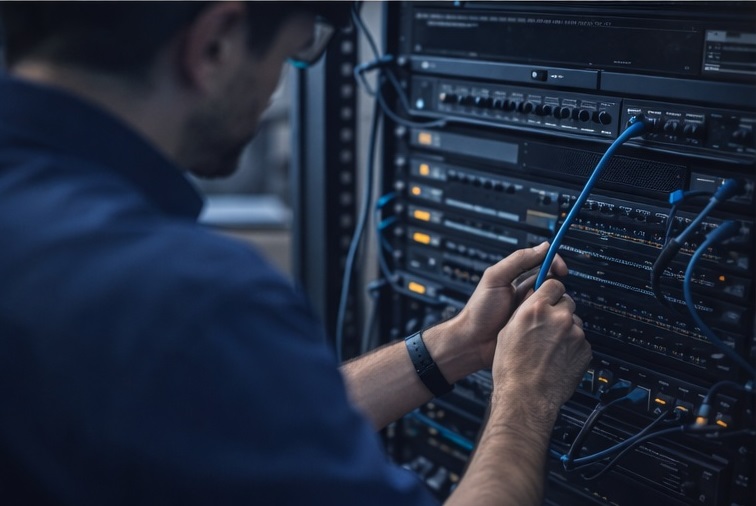
For me, a great deal of cybersecurity work begins in the parts of the environment that many organizations depend on every day but may not think much about until something happens: the network, the firewall, and the logs.
When those parts work well, you gain better control and much better opportunities to detect problems early. When they are unclear, security work becomes much harder.
I want to understand how traffic actually moves
When I look at a network, I do not want to know only that it works. I want to understand how it is structured and how traffic moves between different parts. I like to look at segmentation, internal and external boundaries, access between clients, servers, and administrative systems, remote access, supplier connections, and which systems are actually exposed.
That matters because many security issues do not arise in a single device alone. They arise in the way the environment is structured as a whole.
The firewall should be thought through, not just present
A firewall is not strong merely because it exists. What matters is how it is configured and how well it fits the organization’s real needs. I want to understand what is open and why, which rules are actually required, whether old exceptions are still hanging around, whether remote access is properly limited, and whether there is sufficient logging and visibility.
Logs matter when you want to see more than symptoms
When something happens, I do not want to have to guess. That is why I think logs and security analysis are so important. With the right logging, you can see unusual sign-ins, repeated errors, suspicious traffic, failed access attempts, and changes that might otherwise have gone unnoticed.
SIEM and security analysis should help prioritization
For me, the value of SIEM and log management is not in collecting as much data as possible. The value lies in making the right data usable. I want to see what is truly important, what belongs together, and what should be followed up first.
I like security that can be explained
Even when the work is technical, I want it to be explainable to the customer. It is not enough to say that segmentation should be improved or rules should be reviewed. I want to show why it matters, what the risk is, and how an improvement would strengthen the environment.
I want the customer to understand their risk picture
Security work becomes much more effective when the customer understands their actual risk picture. That means showing not only what exists technically, but what the findings mean in practice.
I place a lot of value on clear reporting
Reporting should help people act. It should not be vague or difficult to follow. I like clear reporting with sensible priorities, concrete observations, and recommendations that can be translated into action.
I like combining technology with advisory work
Some of the most valuable security work happens when technical analysis is combined with guidance. It is one thing to identify a problem. It is another to help the customer understand how to improve the environment over time.
Follow-up determines whether security work actually has an effect
Without follow-up, security efforts easily become a report on a shelf. I think follow-up is what turns findings into real improvements. That can mean reviewing what has been changed, reassessing the risk picture, or helping the customer prioritize the next steps.
I thrive in a customer-facing role
I enjoy working close to the customer, where technology, communication, and practical improvement come together.
That is how I want to work with networks, firewalls, logs, risk assessment, reporting, and follow-up: in a way that strengthens security, increases clarity, and leads to real change rather than only technical findings.